How to Make an Authentic Song with Suno
Purpose and Creative Context
This project began with an ordinary gesture: I drummed on my desk with my hands and recorded the result. That brief recording became a rhythmic sketch from which I developed a fuller musical composition using Suno and Audacity.
- capturing an original hand-drummed rhythm;
- using that rhythm to guide an AI-assisted instrumental arrangement; and
- adding my own live overdubs and mixing the resulting tracks in Audacity.
Here, authenticity refers to preserving the creator’s original rhythmic idea, musical judgment, and live performance throughout the production process. It is not intended as a claim that one short composition represents the breadth of African musical traditions.
Creative Workflow at a Glance
| Stage | Source | Creative action | Result |
|---|---|---|---|
| 1 | Hands and desk | Improvised and recorded a rhythmic idea. | Original rhythmic sketch |
| 2 | Original recording and written prompt | Asked Suno to expand the rhythm with percussion, guitars, and piano. | AI-assisted arrangement |
| 3 | Suno arrangement and new live recordings | Recorded additional supporting parts and mixed all tracks in Audacity. | Final composite mix |
The technology did not supply the initial idea. The process began with a human-generated rhythm, used AI to explore one possible expansion, and then returned to human performance and mixing for the final version.
1The Original Desk Rhythm
I began by drumming on my desk with my hands and experimenting with different patterns until I found a rhythm that felt promising. Rather than beginning with an instrument or a pre-existing digital loop, I treated this recording as a rough rhythmic sketch.
Listen to the original recording
If the player does not load,
open or download the original desk recording.
2Expanding the Rhythm with Suno
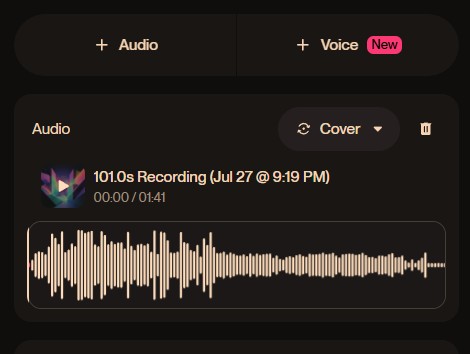
After recording the initial rhythm, I uploaded the audio and supplied a concise prompt to guide its musical expansion:
“Convert this into a strong African drumbeat with exquisite guitars and piano.”
The aim was to retain the pulse and energy of the original hand-drummed rhythm while exploring a richer instrumental setting. The generated arrangement introduced a fuller percussion section together with melodic guitar and piano textures.
The original rhythm became part of a layered arrangement. The musical scale expanded, but the desk recording remained the conceptual point of departure.
3Live Overdubs and the Audacity Mix
I next imported the Suno-generated audio into Audacity. I recorded additional supporting live tracks and mixed them with the generated arrangement. In the session image below, the blue waveform is the Suno track, while the green waveforms are the additional parts that I recorded.
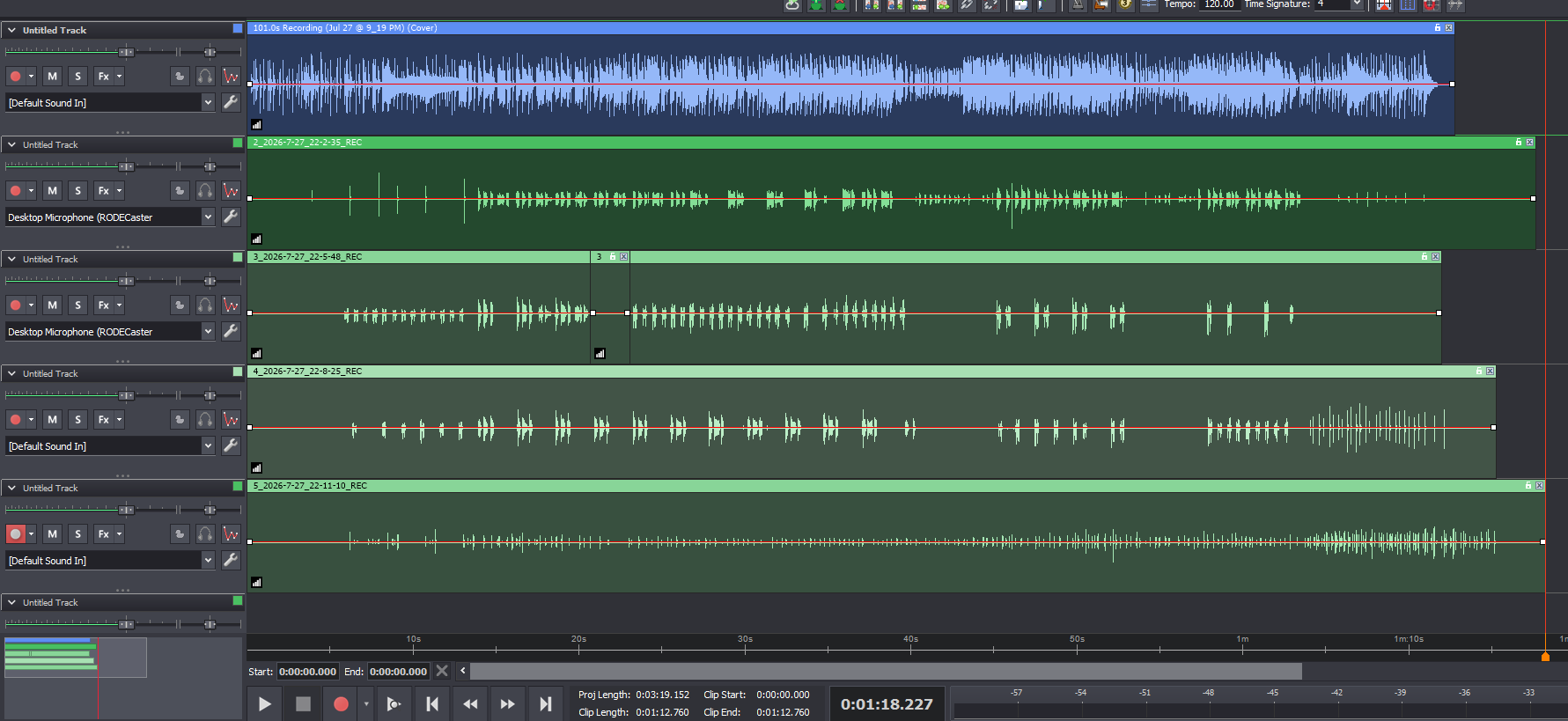
This stage restored direct performance to the center of the process. The generated arrangement became one component within a broader session shaped by live recording, balance, timing, and mixing decisions.
Comparing the Three Recordings
| Recording | Primary contribution | What to listen for |
|---|---|---|
| Original desk rhythm | Human improvisation and rhythmic seed | The pulse, accents, spacing, and irregularities of the initial idea |
| Suno arrangement | AI-assisted orchestration and stylistic expansion | The added percussion, guitar, piano, and enlarged musical texture |
| Final Audacity mix | Human overdubs, editing, balance, and final production decisions | How the live additions interact with and reshape the generated track |
Creative Reflection
What began as an informal rhythm tapped on a desk became the structural foundation for a complete musical piece. The experiment shows how a spontaneous idea can be captured, expanded through generative technology, and then reshaped through live performance and conventional audio production.
AI functioned here as an intermediate creative collaborator, not as the sole originator of the work. The project’s identity emerged from the relationship among the original rhythm, the generated arrangement, the live additions, and the final mix.
Vignon Oussa
Suno, guided by the supplied recording and prompt
Vignon Oussa, using Audacity
Recordings and Project Links